



Please Leave Us A Message
Privacy statement: Your privacy is very important to Us. Our company promises not to disclose your personal information to any external company with out your explicit permission.

50,000 per hour of downtime: above it, premium tooling wins; below roughly 10,000 per hour, D2 still does. The grading below is the one Ruilong issues with each line, and the section 2 explains where the d2 vs carbide slitter knife life comparison stops being about life at all. 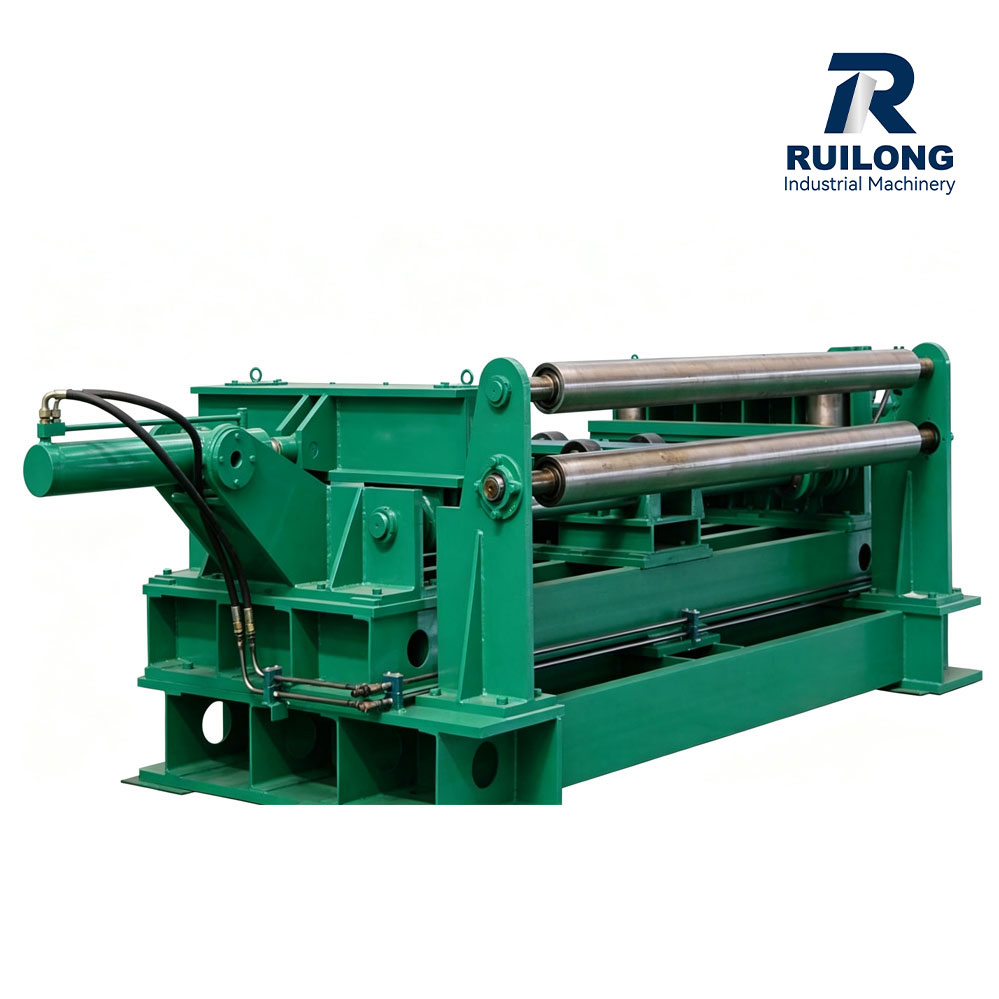
Hardness, toughness and regrindability — and they do not improve together. Hardness sets wear resistance, toughness sets whether the edge chips, and the two move in opposite directions. That single trade is what the whole table turns on.
| Material | Hardness | Toughness | Wear resistance | Regrind | Relative cost | Life vs M2 |
| D2 tool steel | 58–62 HRC | Medium | Medium | Yes, standard wheel | 1× | 0.6× |
| HSS M2 | 62–64 HRC | High | Good | Yes, standard wheel | 1.5× | 1× |
| HSS M42 | 65–67 HRC | High | Very good | Yes, standard wheel | 2× | 1.4× |
| Tungsten carbide | 88–92 HRA | Low | Excellent | Diamond wheel only | 4–6× | 3–8× |
| Ceramic and cermet | 92+ HRA | Very low | Exceptional | Not regrindable | 8–12× | 5–12× |
Two entries in that table carry costs the price column hides. Carbide cannot be reground on a standard surface grinder — it needs diamond wheels and a toolroom set up to use them, so a shop that regrinds its own M2 in an afternoon may find carbide takes a week once it goes out to a specialist. Ceramic cannot be reground at all, which makes it a consumable rather than a tool and confines it to foil and separator work where nothing else holds the edge.
Coatings sit on top of the choice rather than replacing it. TiN, CrN and DLC typically return 1.3–2× life in comparable conditions, and they matter most on galling-prone materials such as aluminium and copper alloys.
✅ Bottom line: read the toughness column before the life column, because a knife that chips on your line has no life figure worth comparing.
Match the grade to the material you run most, then check the arithmetic against your downtime cost. The best knife material for slitting stainless steel strip is not the best one for carbon, and published application guidance converges closely enough to be used directly:
Three checks before you upgrade a grade, in the order Ruilong applies them:
How long do slitting knives last before regrinding depends above all on abrasiveness. A working rule for a high-productivity line is every 100–200 operating hours or 30,000–50,000 linear metres, whichever comes first. The cheapest condition monitor on the line is the slitter drive: a rise of around 15% in motor current over the baseline for that job is a reliable dulling signal, and it costs nothing to log. Ruilong ships two complete tooling sets with every line so a regrind never stops production.
✅ Bottom line: carbide is bought with a tolerance budget and a regrind route, not with a purchase order — lacking either, M42 is the better knife.
Q: What is the honest d2 vs carbide slitter knife life comparison for a general service centre? A: Carbide runs 3–8× the edge life of HSS and roughly 10–20× D2 in demanding applications, at 4–6× the purchase price of D2. On mixed carbon work with low downtime cost, D2 or M2 still wins on total cost.
Q: What is the best knife material for slitting stainless steel strip? A: M42 as the floor for 304 and 316, moving to carbide for volume or for the harder 420 and 430 grades. Ruilong grades stainless work this way on every line it ships. Keep clearance on the lower end of the range and keep the cut zone lubricated, since stainless work-hardens as the knife penetrates.
Q: How long do slitting knives last before regrinding in normal service? A: Roughly 100–200 operating hours or 30,000–50,000 linear metres. Material abrasiveness dominates the spread — silicon steel and heavily coated coil sit at the short end, annealed carbon at the long end.
Send Ruilong your grades, gauge range and monthly tonnage. As a Slitting Line manufacturer in China, Tai'an Ruilong Machinery Co., Ltd. specifies the custom knife grade per material you run, ships the matched OEM/ODM knife, spacer and stripper-ring set as one package with two complete sets in rotation, and quotes factory-direct — one tooling supplier instead of three.

October 25, 2026
October 24, 2026
Email to this supplier
October 25, 2026
October 24, 2026
Privacy statement: Your privacy is very important to Us. Our company promises not to disclose your personal information to any external company with out your explicit permission.
Fill in more information so that we can get in touch with you faster
Privacy statement: Your privacy is very important to Us. Our company promises not to disclose your personal information to any external company with out your explicit permission.