



Please Leave Us A Message
Privacy statement: Your privacy is very important to Us. Our company promises not to disclose your personal information to any external company with out your explicit permission.

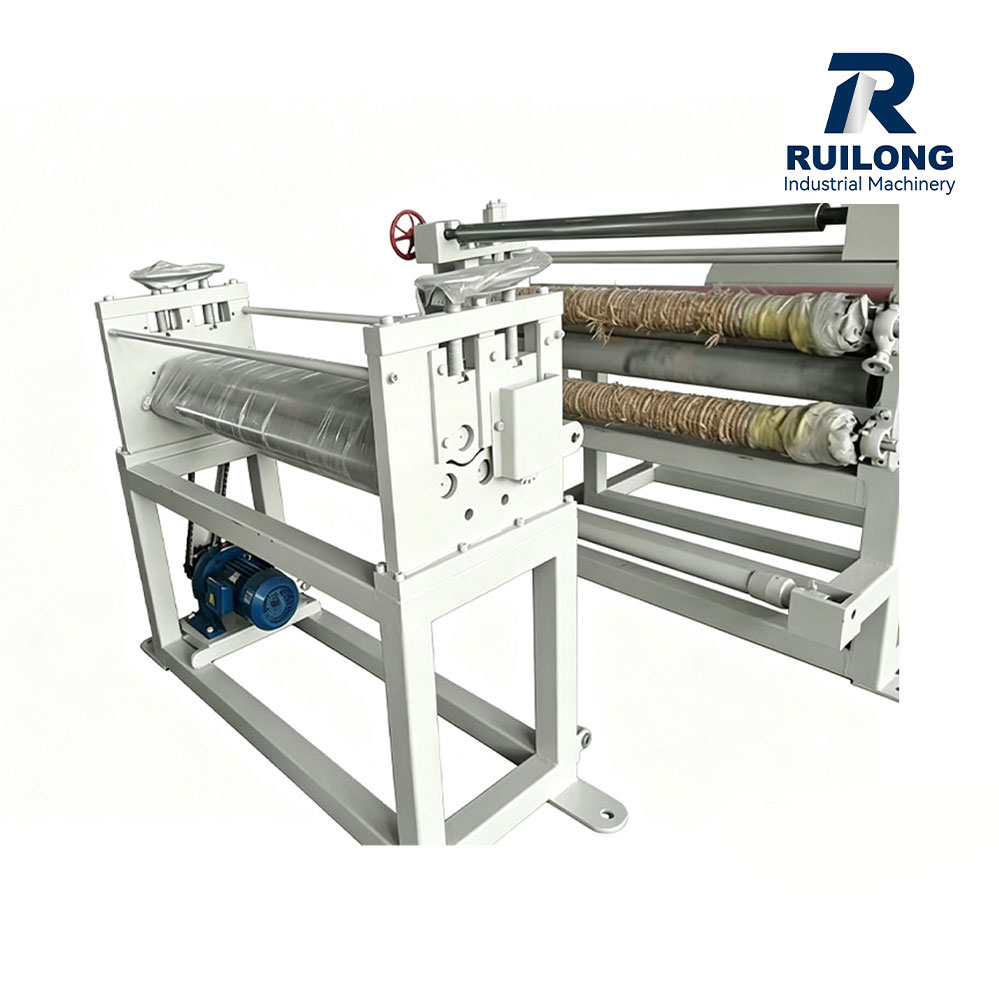
An ordinary tolerance shifts every cut by the same amount; runout shifts each cut by a different amount, cycling once per revolution. The consequence is a signature you can read without instruments. Uniform burr down the whole coil points at clearance or at knife wear. Burr that comes and goes along the length, or differs between strips cut by neighbouring knives in the same gang, points at runout.
Do the arithmetic on a common job. Annealed 1 mm cold-rolled runs roughly 5% clearance, so 0.05 mm total gap. Introduce 0.01 mm of total indicated runout at the knife and the gap cycles between 0.04 and 0.06 mm — a 20% swing each way, applied at rotational frequency. At 120 m/min with a Ø250 mm knife that is roughly 150 times a second. No chart setting survives that, and no amount of re-setting the gap will fix it, because the gap is correct on average and wrong at every instant.
Three separate sources feed the figure, and they are usually conflated:
| Source | Typical published figure | Measured where | Fails first on |
| Arbor journal radial runout | ≤0.005 mm normal, ≤0.003 mm high at the fixed end; ≤0.01 mm normal, ≤0.005 mm high mid-span | Bare shaft on bench | Wide, heavy-gauge lines |
| Shoulder and face axial runout | ≤0.008 mm normal, ≤0.004 mm high | Against the locating shoulder | Thin gauge, high strip count |
| Assembled TIR after torque | Not usually published | On the mounted knife rim | Every precision job |
Two of those three appear in most vendor literature. The third — the one that actually reaches the strip — almost never does, because it depends on the tooling the buyer supplies. A slitter built to 0.005 mm at the journal will still deliver 0.03 mm at the knife rim if the spacers sitting on it are held to generic import tolerance and the clamp nut is tightened by feel. Ruilong therefore measures the assembled figure on every line before it ships, rather than quoting the bare shaft.
✅ Bottom line: burr that varies within a single coil is a runout symptom, and no clearance setting will correct it because the gap is right on average and wrong at every instant.
Specify the assembled tooling stack under clamp torque, and specify spacer thickness as the controlling figure. Spacers set every lane position in the gang, and their errors add in one direction down the arbor, so the spacer thickness tolerance for Slitting Line accuracy matters more than the grade of steel in the shaft.
| Spacer grade | Width tolerance | 20-piece stack, worst case | Realistic capability |
| Precision, battery foil and fine copper | ±0.002 mm | ±0.04 mm | ±0.05–0.10 mm width |
| Standard industrial | ±0.005 mm | ±0.10 mm | ±0.10–0.15 mm width |
| General purpose | ±0.010 mm | ±0.20 mm | Commercial work only |
| Generic import | ±0.020–0.050 mm | ±0.40–1.00 mm | Outside most specs |
Four things move the assembled figure after the tooling is bought, and three of them are free to control:
✅ Bottom line: buy the arbor for stiffness and buy the accuracy in the spacers, then sort them into plus and minus groups so the errors cancel rather than stack.
Q: What slitter arbor runout tolerance for precision slitting should go into a purchase specification? A: Ask for assembled total indicated runout measured on the mounted knife rim, under clamp torque, with the spacer set you will actually run. A bare-shaft figure alone is not a specification, because the tooling contributes most of the error.
Q: Is ±0.01 mm spacer thickness tolerance for slitting line accuracy good enough? A: For commercial carbon work on gauges above 1 mm, yes. Below 0.5 mm, or on stainless and electrical steel, no — move to ±0.005 mm or ±0.002 mm, because at 0.3 mm foil the entire clearance window is around 40 µm.
Q: How much arbor deflection affects strip width tolerance on a line I already own? A: Request or measure the deflection curve at maximum separating force; anything approaching 0.08 mm per metre will show up as width drift between the first and last strip in the gang. If the figure is unknown, measure strip width at both edges of the coil at full load and compare it with a slow-speed sample.
Send Ruilong your gauge range, strip count and width tolerance. As a slitting line manufacturer in China, Tai'an Ruilong Machinery Co., Ltd. supplies the custom arbor and the matched OEM/ODM spacer set as one package, quotes factory-direct, and states the assembled runout figure in the contract — one tooling supplier accountable for the number that reaches the strip.

October 25, 2026
October 24, 2026
Email to this supplier
October 25, 2026
October 24, 2026
Privacy statement: Your privacy is very important to Us. Our company promises not to disclose your personal information to any external company with out your explicit permission.
Fill in more information so that we can get in touch with you faster
Privacy statement: Your privacy is very important to Us. Our company promises not to disclose your personal information to any external company with out your explicit permission.