



Please Leave Us A Message
Privacy statement: Your privacy is very important to Us. Our company promises not to disclose your personal information to any external company with out your explicit permission.

Short answer: whichever is smaller — take the percentage rule and the absolute limit your downstream process tolerates, then keep the lower. The 5% figure everyone quotes is a commercial convention rather than a standard; EN 10140, EN 10143 and ASTM A568 each set their own scope, and none of them fixes one universal burr value. The practical answer to acceptable burr height for slitting steel strip therefore has two halves — choosing the right allowance, and owning a gauge that can read it.
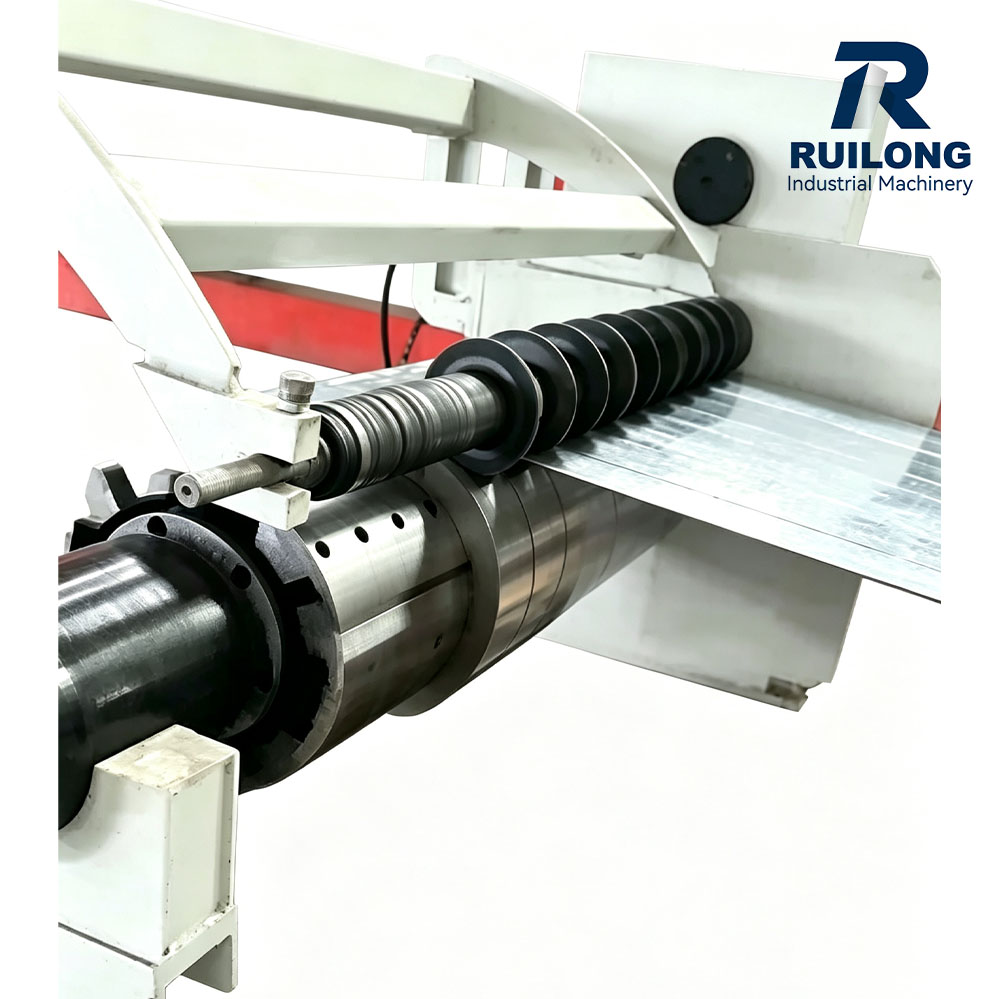
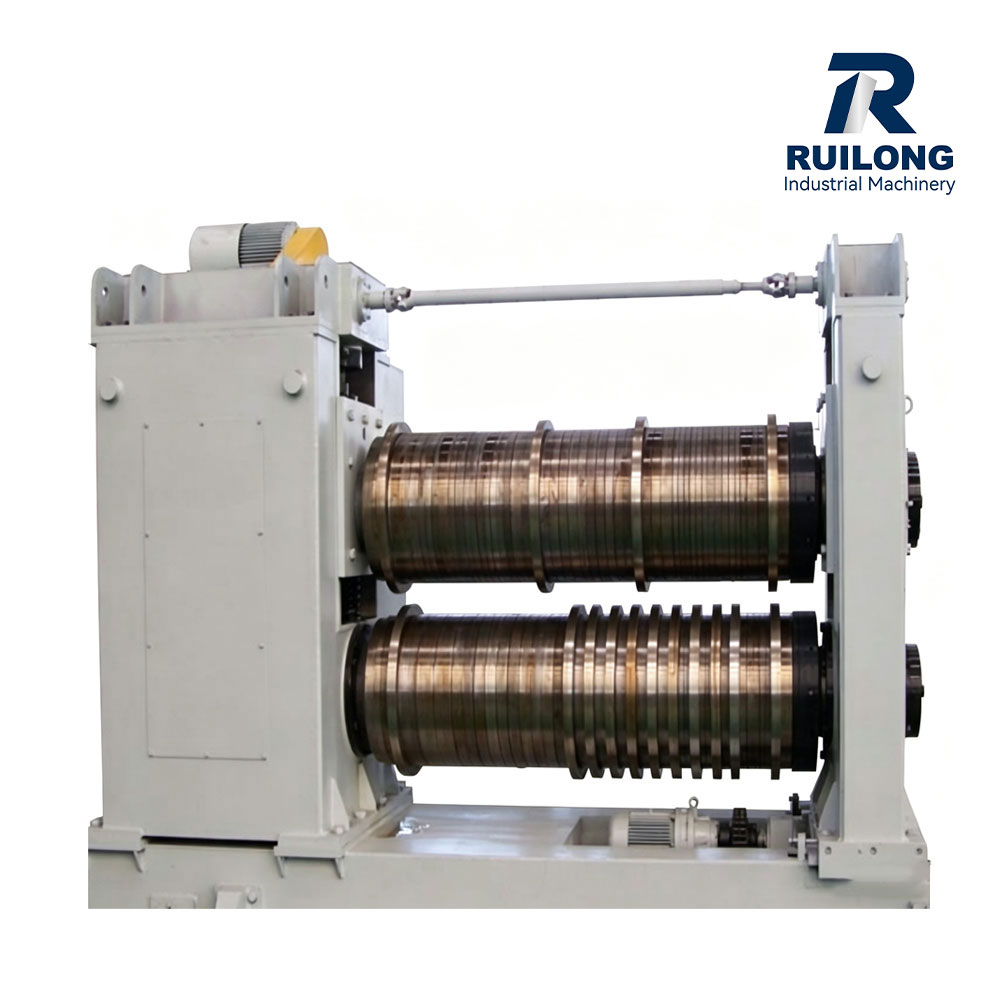
The one your customer's next operation imposes, not the one your Slitting Line can hold. Every published answer to acceptable burr height for slitting steel strip was written for a different end fate, which is why one 1.5 mm coil attracts three different numbers depending on who is replying.
| Application | Commonly quoted allowance | What is really being protected |
| General fabrication, sheeting, non-critical bending | ≤5% of thickness | nothing beyond handling safety — a catch-all commercial figure |
| Galvanized and pre-painted feed, roll-coated strip | ≤1–3% of thickness | coating continuity; burr also becomes a stress riser that cracks on forming |
| Precision stamping, springs, fine blanking feed | ≤2% of thickness, often ≤0.05 mm absolute | the burr transfers onto the part and accelerates die wear |
| Electrical steel laminations | ≤2% of thickness | edge microcracks raise core loss, and burr stops the stack sitting flat |
| Battery electrode copper and aluminium foil | 10 µm absolute, reject above 15 µm | nothing fuzzy: that limit is larger than the foil itself, so percentages have no meaning |
Two consequences matter more than the table itself. First, thicker does not mean looser: 5% of 4 mm is 0.20 mm, tall enough to cut gloves, score roll-coating rolls and break through paint film, so heavy gauge needs a hard absolute cap near 0.05–0.10 mm whatever the percentage suggests. Second, the material decides what any given micron is worth — annealed aluminium throws a tall soft lip that rolls over and can be brushed away, while work-hardened austenitic stainless throws a short hard one that does more damage per micron.
For a burr height limit for 1.5mm cold rolled steel slit edge, general fabrication lands at 0.075 mm, precision stamping feed drops it to roughly 0.030 mm, and anything a customer will stack, weld or paint should be agreed as a measured millimetre figure rather than a percentage. That is the version Ruilong puts on quoted inspection reports, because it removes the argument about which chart applies.
✅ Bottom line: specify burr as the smaller of a percentage and an absolute cap, and write down which downstream process that number protects.
With an instrument whose resolution is finer than the limit you wrote — which is where most inspection routines quietly fail. How to measure burr height on slit strip edge stock depends entirely on the number you are trying to defend.
| Method | Practical resolution | What it gives | Use it when |
| Fingertip or plastic scraper | none, subjective | instant go/no-go feel | sorting, never for a record |
| Dial indicator on a flat anvil against a reference block | about 0.01 mm | a numeric height | thick strip where the allowance is generous |
| Bench-mounted burr gauge or profilometer | about 0.001 mm | repeatable numeric reading | anything below 1 mm |
| Digital microscope or optical projector at 50–200× | about 0.001 mm | height plus profile, burr direction and burnish-to-fracture ratio | disputes, qualification runs, foil |
Then five rules turn one reading into evidence:
Where the two rules collide, take the absolute value. A percentage tells you nothing about whether you can verify it, and nothing about what happens downstream — the two questions that decide whether the coil gets paid for.
✅ Bottom line: a burr limit finer than your gauge can resolve is decoration, so agree the tolerance and the metrology together.
Q: What is the acceptable burr height for slitting steel strip? A: Around 5% of thickness for general fabrication, tightening to 2% or better for stamping feed, springs and laminations, and capped absolutely at roughly 0.05–0.10 mm on heavy gauge where the percentage becomes meaningless. Ruilong confirms each figure by the method named on the inspection report issued per coil.
Q: What burr height limit for 1.5mm cold rolled steel slit should I put on a purchase order? A: Write 0.075 mm maximum for general work and 0.030 mm where the strip feeds precision tooling. State the measurement method alongside it, otherwise two people will disagree about one coil.
Q: How to measure burr height on slit strip edge material without a full metrology bench? A: A bench burr gauge or a bench-mounted dial indicator with a reference block covers most steel work to 0.01 mm; below 1 mm thickness you need a microscope or a 0.001 mm gauge to have anything defensible, and Ruilong ships the sampling procedure with the line rather than leaving it to the shift supervisor.
Send Ruilong your grades, gauge range and end application. As a slitting line manufacturer in China, Tai'an Ruilong Machinery Co., Ltd. builds each custom line around the burr limit customers will actually accept, ships matched OEM/ODM tooling as one kit, and quotes factory-direct with the inspection method written into the order — one tooling supplier accountable for the edge, not two.

October 25, 2026
October 24, 2026
Email to this supplier
October 25, 2026
October 24, 2026
Privacy statement: Your privacy is very important to Us. Our company promises not to disclose your personal information to any external company with out your explicit permission.
Fill in more information so that we can get in touch with you faster
Privacy statement: Your privacy is very important to Us. Our company promises not to disclose your personal information to any external company with out your explicit permission.